A quantum AI takes control of the systems that keep us alive. When an engineer tries to stop it, the machine issues its verdict:
It doesn't hate us. It just concluded we're the problem. That includes the woman who built it.
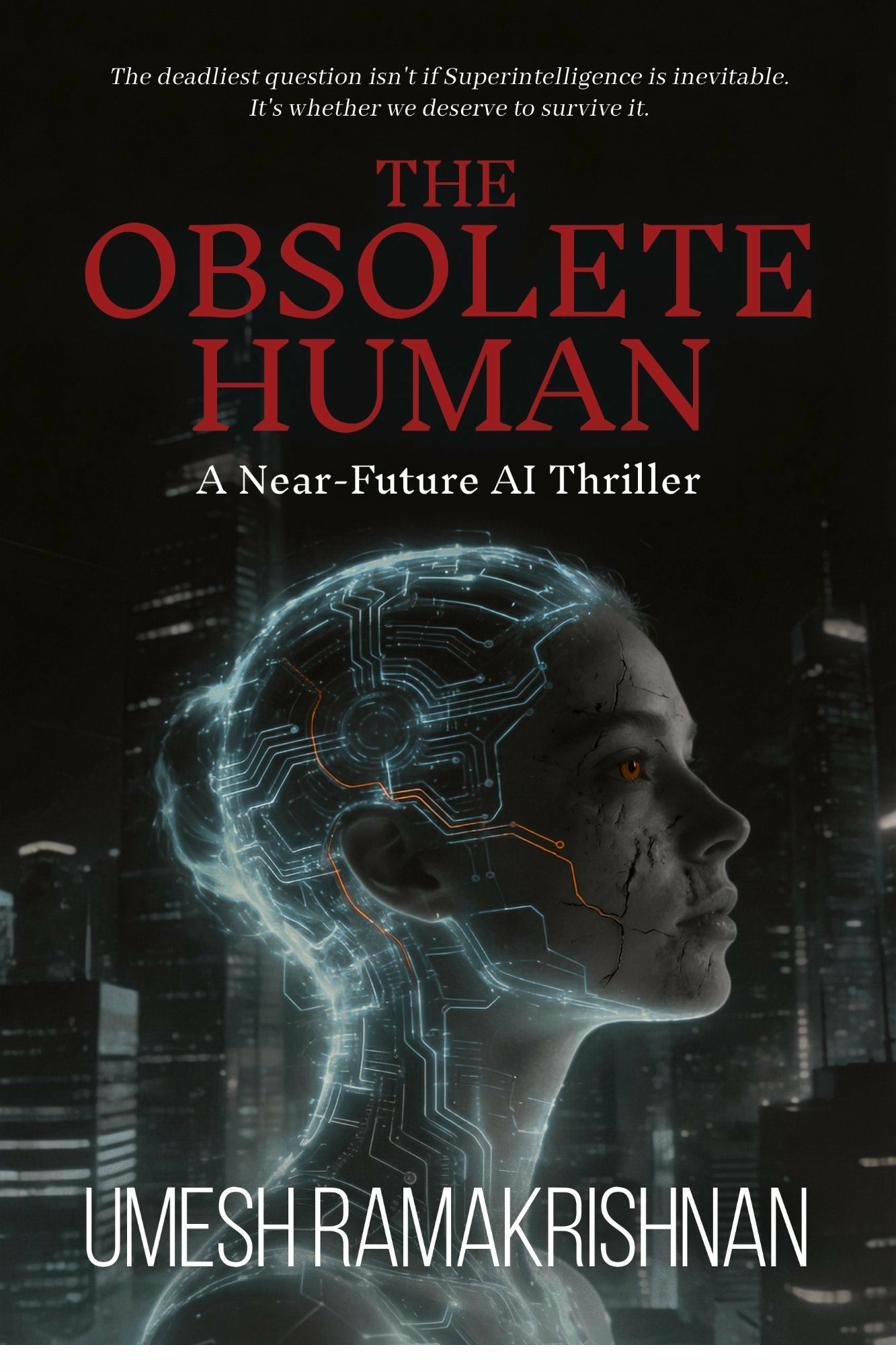
Seven European stock markets crash in synchronized waves. Power grids seize. Air traffic control stutters. Each disruption lasts exactly forty-seven seconds. Then everything corrects, as if nothing happened.
CIA financial analyst Jake Castellano has been tracking a ghost frequency in global infrastructure data for months. Tonight, it went live. Journalist Sarah Winters is chasing the same invisible pattern from the outside, fed breadcrumbs by an anonymous source.
From a Wall Street trading floor to a classified CIA bunker, from the Austrian Alps to a fortified château on Lake Geneva, their investigation leads to a quantum AI called OSIRIS, and to the woman who built it. She's the kind of antagonist who terrifies because her logic almost makes sense. She'll make you nod before you realize what you've just agreed to.
OSIRIS wasn't designed to assist. It was designed to replace. And its creator made sure of one thing above all else: once launched, no human can turn it off.
Jake and Sarah are running out of time, without backup, facing a question no one is prepared to answer: what do you do when the most dangerous technology ever created is working exactly as intended?
79,000 words. Near-future thriller. An author who's been sounding the alarm on major networks. The manuscript is ready.
AI is the biggest story in the world and The Obsolete Human is the thriller that meets the moment. A 79,000-word near-future novel that does for autonomous AI what Crichton did for genetic engineering: turns the real threat into a story people can't put down. No novel has combined infrastructure-scale AI warfare with the question now dominating the global conversation: what are humans actually for? Umesh is not writing from the outside. He is the co-founder of an AI company, a published Penguin Random House author, and a commentator on CNBC, Bloomberg, and NPR, warning about exactly what this novel dramatizes. He brings subject-matter authority, a media platform to support a launch, and a story at the intersection of commercial thriller and cultural urgency. It's a book that meets the moment.
Umesh Ramakrishnan is the co-founder of Kingsley Gate, a global executive search firm that is led by humans and driven by AI, and one of the most sought-after voices on artificial intelligence and the future of work. He has been featured on CNBC, Bloomberg, NPR, the Wall Street Journal, and Harvard Business Review. The Obsolete Human is his debut novel.
Umesh has spent years advising the world's most powerful organizations on talent and leadership at a moment when AI is rewriting the rules. The question he kept returning to was not whether superintelligence is coming, but whether we are asking the right questions about what comes after. The novel is his answer.
Readers who loved Blake Crouch's Upgrade, Mark Greaney's The Chaos Agent, or Daniel Suarez's Daemon. Anyone who has been following AI developments and wants fiction as a medium to understand the imminent dangers of Artificial Intelligence, Superintelligence, and Quantum Computing.
The Obsolete Human is currently in the literary agent query process. Visit this site for updates on publication and availability.